
Building vs Buying a Transcription API
Key Takeaways
- Transcription APIs reduce costs by 30-50% through pay-as-you-go models, eliminating upfront infrastructure investments.
- Third-party APIs achieve higher accuracy rates than in-house systems without dedicated AI research teams.
- Healthcare industries rely on transcription APIs to ensure HIPAA compliance and minimize documentation errors.
- Pre-trained models from expert-developed APIs outperform custom-built solutions in speed and adaptability.
- Scalable APIs handle fluctuating workloads efficiently, ideal for startups and variable demand scenarios.
- Real-time transcription capabilities enable immediate insights for media, education, and legal sectors.
- Building custom APIs requires significant time and technical resources compared to buying pre-built solutions.
Why Transcription APIs Matter
Transcription APIs have become essential tools for industries relying on audio-to-text conversion, offering efficiency, accuracy, and scalability that traditional methods struggle to match. Their importance spans sectors like healthcare, legal, education, and media, where precise documentation and accessibility are critical. By automating transcription, these APIs reduce manual effort, minimize errors, and enable real-time insights from audio data. Below, we break down their impact, challenges addressed, and the growing demand driving their adoption.
What Makes Transcription APIs Indispensable?
Transcription APIs address core pain points for businesses by combining cost efficiency with advanced technology. For instance, third-party solutions eliminate the need for upfront infrastructure investment, allowing companies to pay only for what they use https://whisperapi.com/building-vs-buying-transcription-api. This pay-as-you-go model is particularly valuable for startups or teams with fluctuating workloads, as discussed in the Buying a Transcription API section. Additionally, APIs use pre-trained models fine-tuned by experts, achieving accuracy rates that often surpass in-house systems developed without specialized AI research teams https://whisperapi.com/should-you-use-a-third-party-transcription-api. The Comparison of Building vs Buying section highlights how these models provide a competitive edge over custom-built alternatives.
A real-world example highlights their impact: in healthcare, accurate transcription of doctor-patient consultations ensures compliance with regulatory standards like HIPAA. Errors in manual transcriptions could lead to misdiagnoses or legal liabilities, but AI-driven APIs reduce this risk by up to 90% in some cases. Similarly, legal firms use these tools to convert court recordings into searchable documents, saving hundreds of hours in manual work annually.
Who Benefits Most from Transcription APIs?
Industries with high-volume audio data see the most significant returns on transcription API investment. For example, media companies use APIs to generate closed captions for videos, improving accessibility and SEO without requiring human transcribers. Education platforms automate lecture recordings into text, enabling students to search for key topics later. Even customer service teams rely on these tools to analyze call recordings for sentiment analysis or quality assurance.
The flexibility of transcription APIs also appeals to niche markets. Providers now offer industry-specific models trained on medical jargon, legal terminology, or technical language, ensuring context-aware accuracy https://whisperapi.com/transcription-api-implementation-best-practices. For instance, a pharmaceutical company might use a custom API to transcribe clinical trial discussions, avoiding misinterpretation of complex drug names or procedures.
The Growing Market for Transcription Services
The transcription API market is expanding rapidly, driven by demand for multilingual support and real-time processing. As of 2025, APIs now handle over 100 languages and dialects, catering to global businesses https://whisperapi.com/accuracy-testing-a-transcription-api. This growth is fueled by remote work trends, where virtual meetings and webinars generate vast audio content needing rapid conversion into text.
However, adoption isn’t without challenges. Security concerns remain a barrier for regulated industries, as uploading sensitive data to third-party servers requires rigorous vetting of encryption protocols and compliance certifications like SOC-2 or GDPR https://whisperapi.com/security-concerns-when-using-a-transcription-api. The Considerations for Developers and Businesses section outlines how organizations can manage these risks while using API benefits.
Despite these hurdles, the market’s trajectory is clear: transcription APIs are no longer a convenience but a necessity for organizations aiming to streamline workflows and extract value from audio data. As providers continue refining models for niche use cases, their role in shaping industry efficiency will only deepen.
Building a Transcription API
Building a custom transcription API requires a deep understanding of speech-to-text (STT) technology, machine learning (ML), and infrastructure management. This section explores the technical requirements, costs, architectural challenges, and integration considerations involved in developing a transcription API, drawing on insights from industry analyses and case studies..
What Are the Key Technical Requirements?
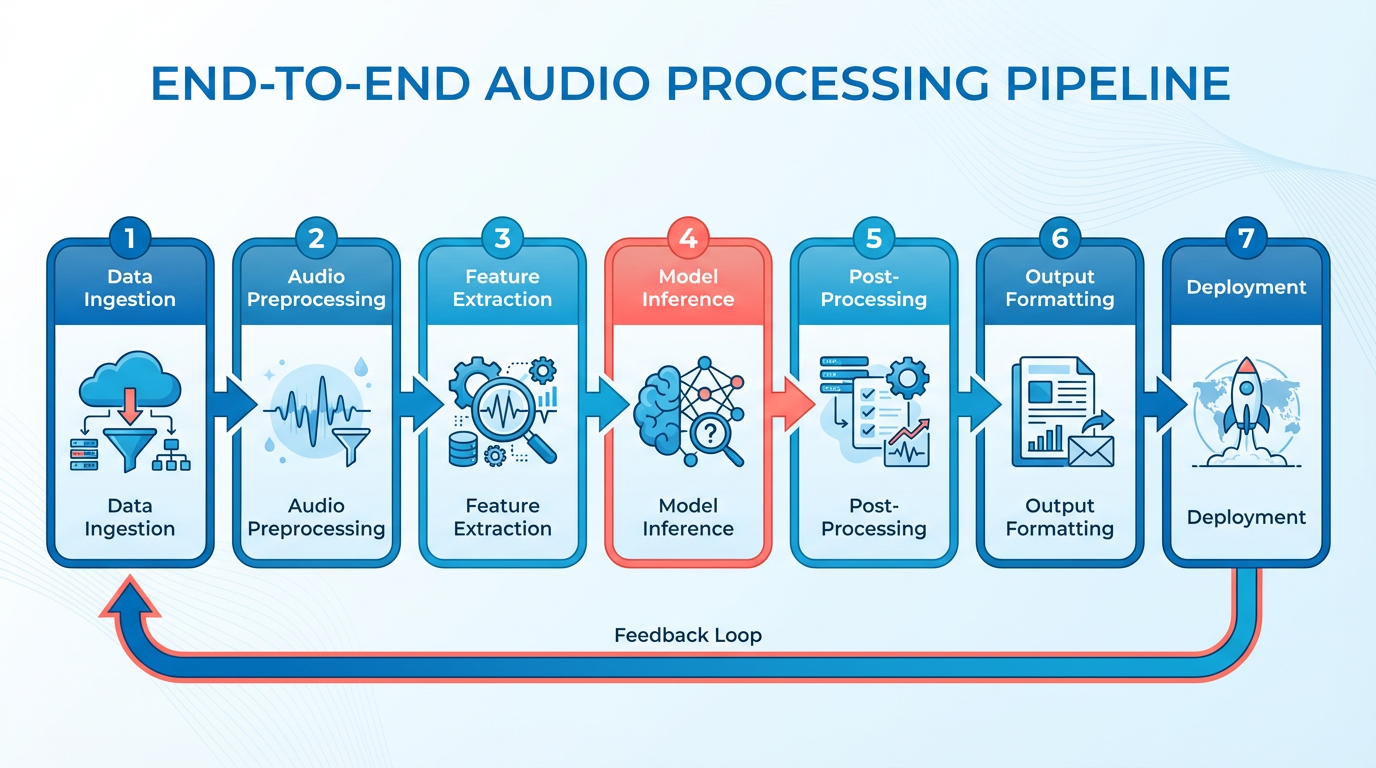
A transcription API relies on a pipeline that processes audio input, extracts text, and returns results. Core components include:
- Audio Processing: Noise reduction, normalization, and format conversion to ensure clean input for the model.
- Speech Recognition Models: Pretrained ML models (e.g., Whisper, DeepSpeech) adapted to specific use cases like accents, domains (medical/legal), or languages.
- Customization Tools: Support for custom vocabularies, language models, and diarization (speaker identification).
- Infrastructure: High-performance GPUs for training, scalable cloud storage, and real-time processing capabilities for streaming audio.
Whisper API’s best practices emphasize the need for strong audio preprocessing and domain-specific model fine-tuning. Rev’s analysis highlights the necessity of large labeled datasets (millions of audio-text pairs) to train accurate models. For example, Rev’s reference model required 1.5 billion training samples and 80 days of GPU time..
What Are the Cost Implications?
Building a transcription API is a capital-intensive endeavor. Key cost drivers include:
| Cost Category | Estimated Range (Annual) | Source |
|---|---|---|
| Engineering Team | $300k–$600k | Rev’s analysis |
| Infrastructure | $50k–$200k+ | GPU clusters, cloud storage |
| Data Acquisition | $20k–$100k | Labeled datasets, domain tuning |
| Maintenance | $100k–$200k | Model updates, security audits |
Julien Lemoine of Algolia warns that small teams often overestimate their capacity, leading to underfunded projects. Rev’s cost comparison shows that for typical workloads (e.g., 1,000 hours/year), a $3,000 annual API subscription outperforms building an in-house solution. As highlighted in the Considerations for Developers and Businesses section, resource allocation and integration complexity further influence cost decisions..
How to Design a Scalable Architecture?
A transcription API typically follows a microservices architecture:
- API Gateway: Handles authentication, rate limiting, and request routing.
- Audio Processing Service: Normalizes inputs and splits long files into chunks.
- Transcription Engine: Uses ML models to convert audio to text, using GPUs for batch or real-time processing.
- Post-Processing Module: Applies custom vocabulary rules, punctuation, and formatting.
- Storage & Delivery: Stores results and delivers via webhooks or file downloads.
Nylas’ architecture for multi-platform transcription (Zoom, Teams, Google Meet) integrates bots for audio capture and uses AssemblyAI for backend processing. Whisper API recommends modular design to enable updates without downtime..
What Challenges Affect Accuracy?
Accuracy is the most critical metric for transcription systems. Challenges include:
- Environmental Noise: Background sounds reduce model confidence.
- Domain-Specific Jargon: Medical or technical terms require custom language models.
- Speaker Diarization: Distinguishing multiple speakers in a conversation.
Whisper API’s testing guide recommends using Word Error Rate (WER) as a benchmark, with lower values (e.g., <5%) indicating high accuracy. Rev’s analysis shows that even state-of-the-art models struggle without domain-specific training. For instance, a legal transcription API might need 10,000+ case-specific terms in its vocabulary..
How to Integrate with Existing Systems?
Integration involves API compatibility, security, and workflow alignment:
- API Endpoints: RESTful or WebSocket interfaces for seamless access.
- Authentication: OAuth 2.0 or API keys for secure access.
- Compliance: GDPR/HIPAA compliance for sensitive data.
- Event-Driven Workflows: Webhooks for real-time updates (e.g., transcription completion).
Nylas’ Notetaker API integrates with calendar systems to automate meeting transcription. Rev’s case studies show that enterprises often require SOC2 or HIPAA certifications for third-party APIs. As outlined in the Why Transcription APIs Matter section, compliance and security remain central to adoption across industries..
Final Considerations
Building a transcription API offers unparalleled customization and data control but demands significant technical and financial resources. Teams must weigh the costs of talent, infrastructure, and ongoing maintenance against the benefits of operational independence. As Julien Lemoine notes, “99% of companies should not build their own infrastructure” unless they can achieve a “factor-10” performance advantage. As mentioned in the Comparison of Building vs Buying section, for most use cases, using existing APIs (e.g., Google Speech-to-Text, AssemblyAI) remains a pragmatic choice.
Key Takeaway: Custom transcription APIs are justified only when core business needs demand proprietary models or strict data control. Otherwise, buying a pre-built solution balances speed, cost, and reliability.
By addressing the technical, financial, and operational hurdles outlined here, organizations can make informed decisions aligned with their strategic goals.
Buying a Transcription API
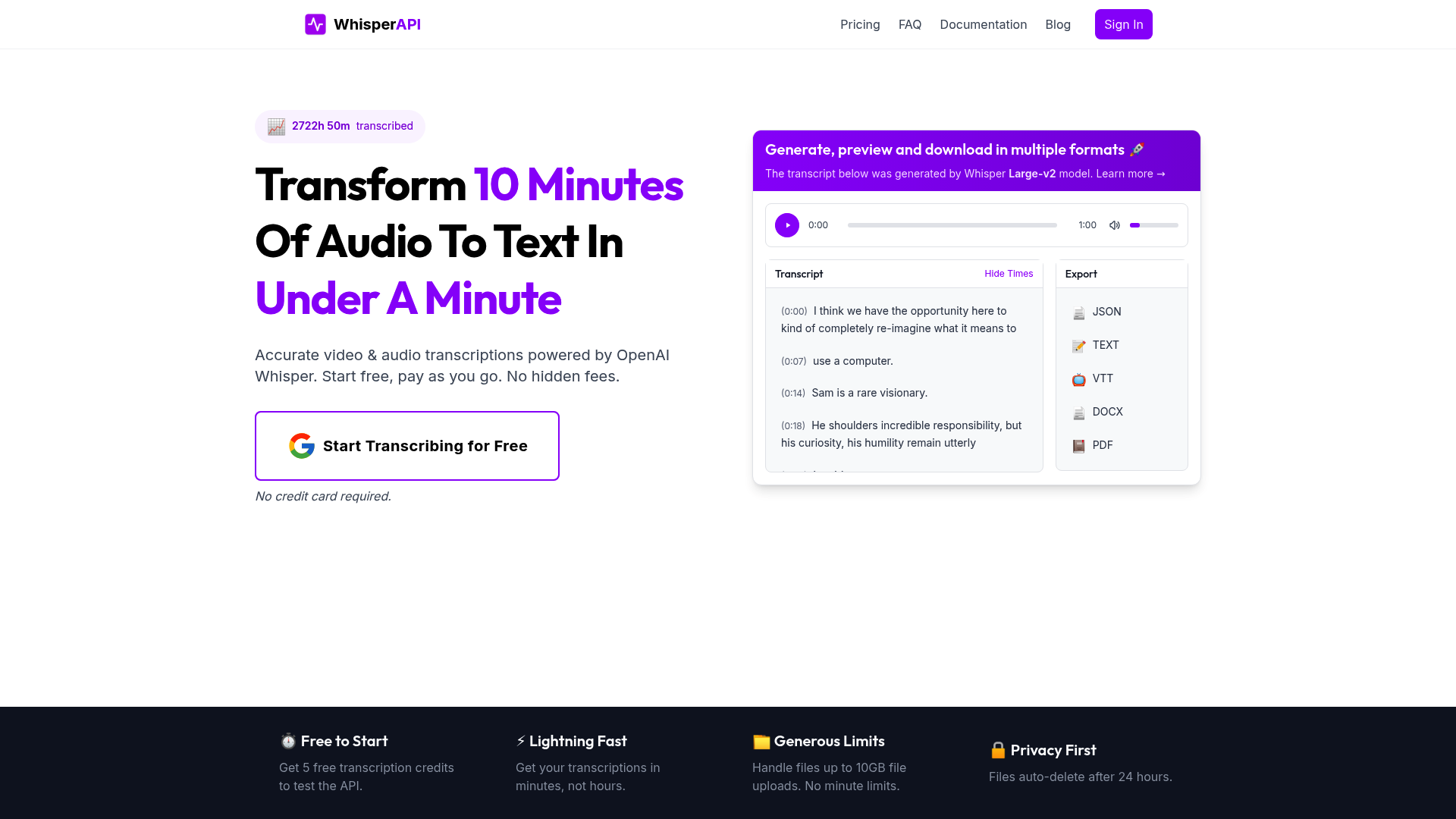
Purchasing a pre-built transcription API offers speed, cost predictability, and access to proven technology. According to Whisper API's analysis, third-party APIs eliminate the need for costly in-house development, with providers handling maintenance, updates, and infrastructure scaling. For example, Azure Speech offers a free tier (5 audio-hours/month) and tiered pricing that discounts per-hour rates for high-volume users. This model suits businesses prioritizing rapid deployment over deep customization. As mentioned in the Building a Transcription API section, developing an in-house solution requires significant investment in machine learning and infrastructure, making APIs a more practical choice for most organizations.
How to Evaluate a Transcription API
Before purchasing, assess these critical factors:
| Criteria | Key Considerations | Example Providers |
|---|---|---|
| Accuracy | Test with diverse audio samples (accents, background noise). Use Word Error Rate (WER). | Whisper API recommends WER benchmarks. |
| Language Support | Check if the API supports industry-specific jargon and multilingual workflows. | AssemblyAI covers 99+ languages. |
| Scalability | Ensure the API can handle peak loads without performance degradation. | AWS Transcribe scales with AWS infrastructure. |
| Compliance | Verify HIPAA, GDPR, or SOC2 compliance for sensitive data. | Azure Speech provides SOC2 and ISO certifications. |
| Cost Structure | Compare pay-as-you-go vs. commitment discounts. Watch for hidden fees. | Rev charges $0.03/minute. |
A SaaStr guide by Julien Lemoine emphasizes that "99% of companies should avoid building infrastructure," citing long-term maintenance costs. For instance, hiring a team to manage a custom API could cost $300k–$600k/year, far exceeding subscription fees for even high-volume usage. This aligns with the Comparison of Building vs Buying section's discussion on cost trade-offs between solutions.
Real-World Use Cases for Pre-Built APIs
Third-party APIs excel in scenarios where speed and reliability are critical. For example:
- Media companies like VICE and Bloomberg use Rev.ai to transcribe thousands of hours of video content monthly.
- Healthcare platforms use Azure’s HIPAA-compliant speech-to-text for patient records.
- SaaS tools integrate Nylas Notetaker to automatically transcribe Zoom, Teams, and Google Meet meetings, saving engineering hours.
A Nylas comparison highlights that APIs like AssemblyAI ($0.37/hour) and Deepgram ($0.0043/15 seconds) are ideal for real-time applications, while OpenAI’s Whisper ($0.006/minute) suits batch processing. For context, transcribing 1,000 hours of audio via Rev costs ~$1,800-far cheaper than maintaining an in-house team.
Security and Customization Trade-Offs
While APIs reduce upfront costs, they introduce risks. Whisper API warns that sending sensitive data to third parties can violate privacy regulations unless the provider offers end-to-end encryption and audit trails. Azure Speech, for example, allows custom models trained on internal data, balancing accuracy with compliance.
However, customization is limited compared to in-house solutions. A Rev analysis notes that APIs often lack support for niche use cases:
- Custom vocabularies: Most APIs let you add 100–500 terms (e.g., medical abbreviations).
- On-prem deployment: Azure and AWS offer private cloud options for strict data governance.
- Latency: Real-time APIs like AssemblyAI achieve 300ms P50 latency but only for English, limiting multilingual workflows.
When Buying Falls Short
Despite benefits, APIs have drawbacks. Lemoine’s "factor-10 rule" advises building only if you gain a 10x performance edge. For example, a legal startup needing millisecond-level speaker diarization might find APIs like Deepgram insufficient, as they lack fine-grained customization. Similarly, if your use case requires domain-specific models that vendors don’t offer (e.g., rare dialects), building becomes necessary.
In conclusion, buying a transcription API is ideal for most businesses, offering cost efficiency and rapid deployment. However, prioritize APIs with strong security, scalability, and customization options to align with your specific needs. Always prototype with a vendor’s free tier or sandbox environment before committing, as Whisper API’s best practices recommend.
Comparison of Building vs Buying
When deciding between building a transcription API from scratch or buying an existing solution, the choice hinges on customization needs, budget, time constraints, and security requirements. Below is a detailed comparison of the two approaches, supported by insights from industry analysis and pricing models..
What Makes Building Unique?
Building a transcription API offers unparalleled control and customization. You can tailor every feature to your specific use case, from supporting industry-specific jargon (e.g., legal or medical terminology) to integrating advanced analytics like sentiment analysis or speaker diarization. This approach is ideal for organizations in regulated fields (e.g., healthcare or finance) where data privacy and compliance are non-negotiable. For example, a healthcare startup handling HIPAA-protected patient records might build an API to ensure full control over data flow and encryption.
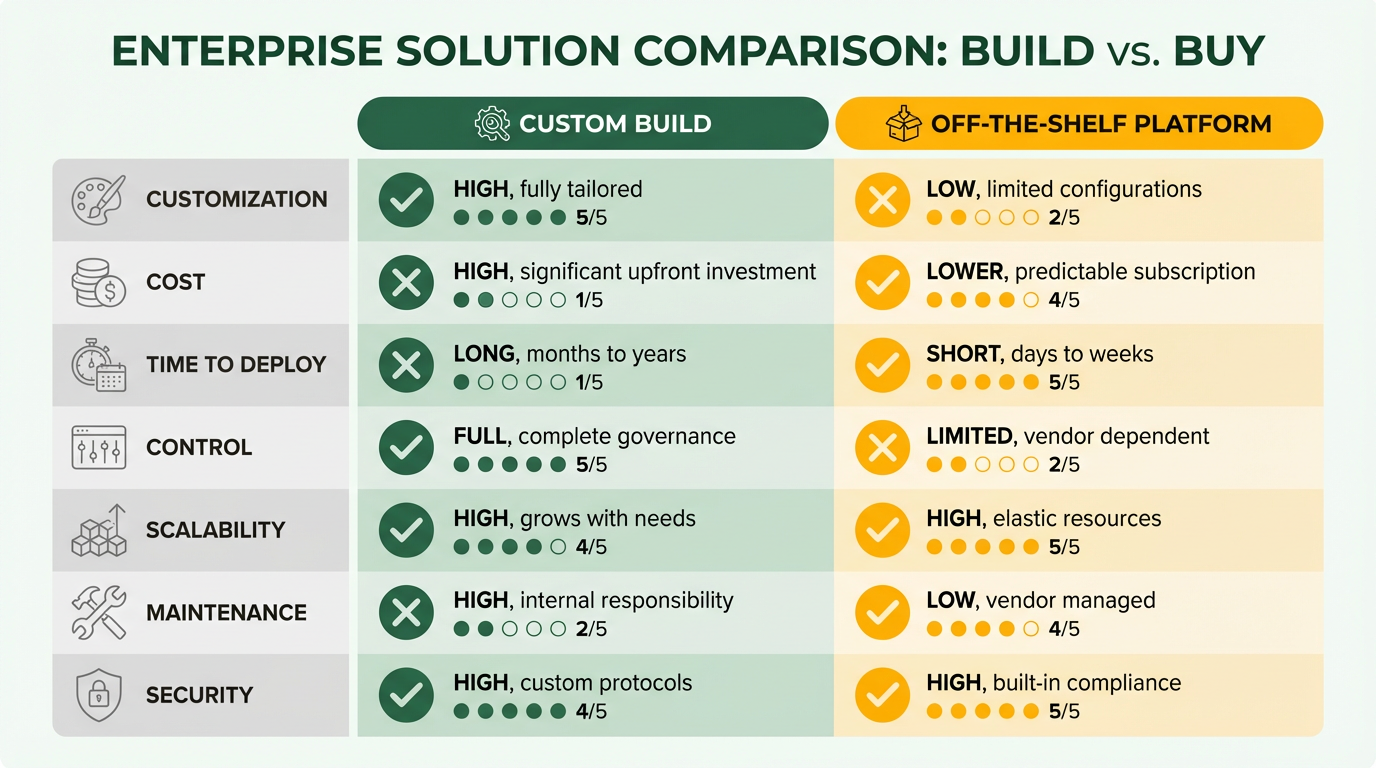
However, building requires significant upfront investment. As outlined in the Building a Transcription API section, development costs include hiring skilled teams in machine learning, audio processing, and natural language processing, plus infrastructure for hosting and scaling. The time-to-market is also longer, often spanning months for research, testing, and deployment. For instance, training a custom speech recognition model with Azure Speech’s custom acoustic and language models can take weeks, as noted in Azure Speech pricing..
When Does Buying Make Sense?
Buying a pre-built API, such as Whisper API ($0.17 per hour), OpenAI’s Whisper ($0.006 per minute), or Nylas Notetaker ($0.70 per hour), is faster and cost-effective for most businesses. These solutions are production-ready within hours or days and eliminate the need for in-house expertise. As detailed in the Buying a Transcription API section, pre-built APIs often include scalability and feature-rich tooling out of the box, such as real-time transcription and language identification. For example, Rev’s analysis found that even at high usage volumes (e.g., 591,666 hours annually), the cost of building an API exceeds the total cost of buying..
Security and Compliance Trade-Offs
Building an API gives you full data control, which is critical for industries with strict compliance requirements. For example, a financial institution handling sensitive client meetings might build an API to avoid third-party data exposure.
Buying introduces security risks. You must verify the vendor’s compliance with regulations like GDPR or HIPAA and ensure encryption for data in transit and at rest. WhisperAPI.com recommends vetting providers for SOC 2 or ISO 27001 certifications and negotiating SLAs for breach response. For instance, Azure Speech’s containerized deployment options allow on-premises use, balancing security with the convenience of a managed solution..
Cost and Time-to-Market Comparison
| Factor | Building | Buying |
|---|---|---|
| Upfront Costs | High (development, infrastructure) | Low (pay-as-you-go or subscription) |
| Time to Market | Months to years | Hours to days |
| Customization | High (full control over models/data) | Limited (custom vocabularies only) |
| Maintenance | Ongoing (model retraining, updates) | Managed by vendor |
| Example Pricing | $300k–$600k/year for a team (Rev) | Whisper API: $0.17/hour; Azure: $0.20/hour |
For small businesses or startups, buying is often the pragmatic choice. As Julien Lemoine of Algolia argues, “99% of companies should not build their own infrastructure”-including transcription APIs-unless they can achieve a factor-10 performance advantage over existing solutions..
Example Scenarios
- Build: A legal tech firm requires transcription of court proceedings with 99.9% accuracy and support for archaic legal terminology. They invest $500k in a custom API to meet compliance and accuracy demands.
- Buy: A remote work platform needs to transcribe Zoom meetings for 10,000 users. Using Nylas Notetaker, they integrate transcription in 3 days at $7,000/month, avoiding the 6-month build timeline..
Final Analysis
Build if:
- You need deep customization (e.g., niche languages, proprietary models).
- Data control is critical (e.g., healthcare, finance).
- You have the budget and technical team for a long-term project.
Buy if:
- Speed and cost-efficiency are priorities.
- Standard APIs meet your needs (e.g., basic transcription, multilingual support).
- You prefer ongoing vendor maintenance over in-house management.
Both paths require careful evaluation of long-term costs, compliance, and scalability. As Julien Lemoine emphasizes, the decision should align with your ability to innovate and compete-not just technical feasibility.
Considerations for Developers and Businesses
Developers must evaluate technical integration complexity and resource allocation when choosing between building and buying a transcription API. Building a custom solution requires expertise in machine learning, audio processing, and natural language processing (NLP), as highlighted in the WhisperAPI analysis [1†L114-L122]. Teams must also manage infrastructure, including servers and storage, which adds to operational overhead. Conversely, third-party APIs like Azure Speech or AssemblyAI offer pre-built integration tools (REST/GraphQL endpoints, SDKs) that reduce development time [7†L90-L98]. However, developers must ensure compatibility with existing systems and assess whether the API supports required features like speaker diarization or multilingual transcription [6†L386-L394]. As mentioned in the Comparison of Building vs Buying section, the trade-offs between customization and time-to-market are central to this decision.
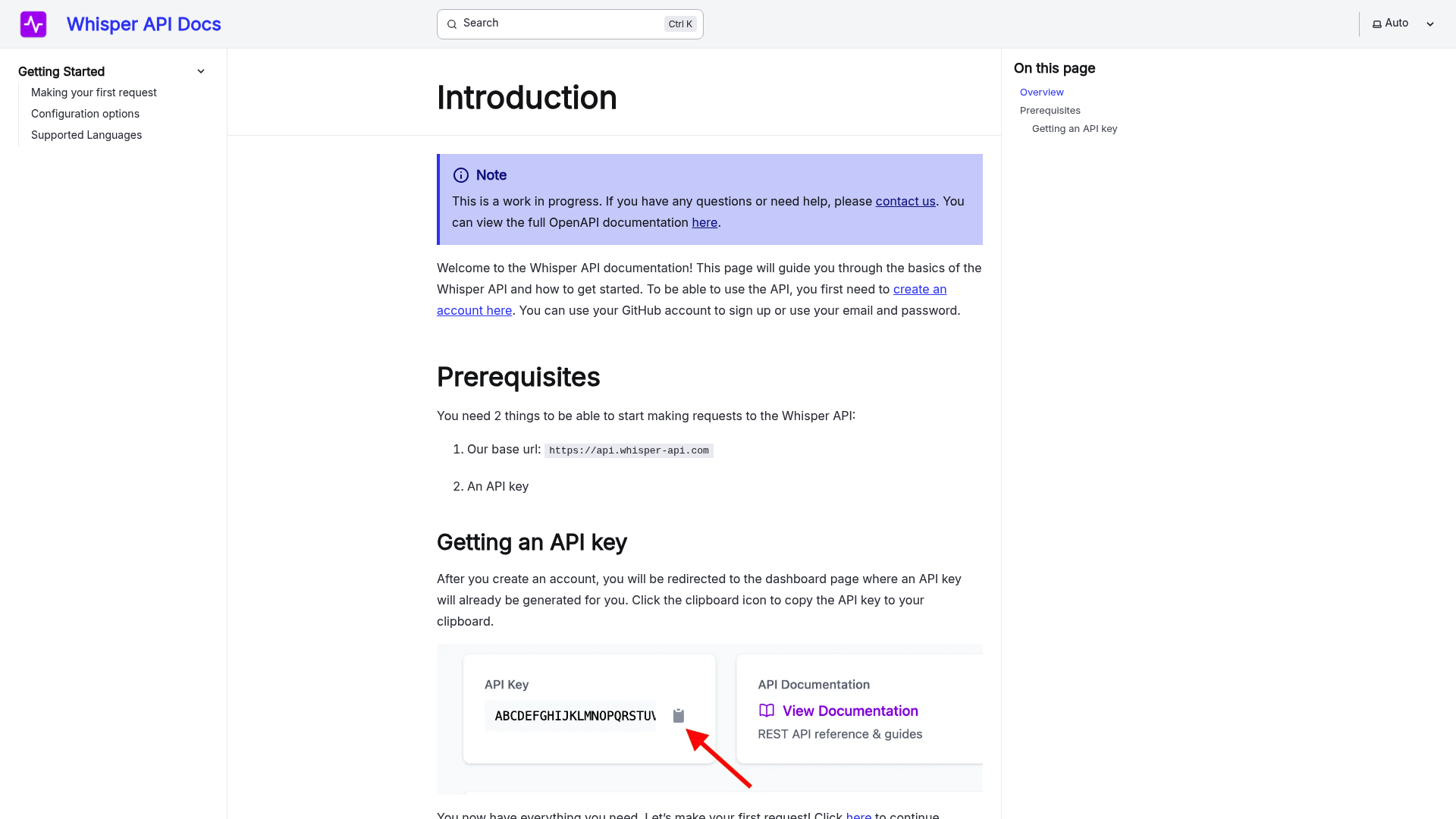
For example, integrating Azure’s Speech-to-Text API involves configuring endpoints and handling authentication via Azure Active Directory [7†L211-L228]. In contrast, building an in-house API demands designing a pipeline for audio preprocessing, model training, and real-time transcription, as detailed in Rev’s technical breakdown of ASR infrastructure [4†L381-L386]. Building on concepts from the Building a Transcription API section, developers must also account for ongoing maintenance and scalability challenges inherent in custom solutions.
| Factor | Build | Buy |
|---|---|---|
| Development Time | Months to years for full deployment | Hours to days for integration |
| Technical Expertise | Requires ML/NLP/Audio specialists | Minimal in-house expertise needed |
| Scalability | Custom cloud or on-prem solutions | Vendor-managed auto-scaling (e.g., AWS) |
Developers should also consider testing frameworks. WhisperAPI emphasizes rigorous accuracy testing using Word Error Rate (WER) metrics to validate transcription performance [10†L118-L143]. These metrics align with benchmarks discussed in the Comparison of Building vs Buying section, where performance validation is a key evaluation criterion..
What Business Case Justifies API Adoption?
The decision hinges on cost trade-offs, time-to-market, and strategic alignment. Building an API is justified only if the organization requires deep customization (e.g., niche industry jargon, proprietary models) and has the budget for long-term investment [2†L261-L268]. Rev’s cost analysis reveals that building an in-house ASR system costs $300k–$600k annually, dwarfing the $1.80/hour cost of third-party services like Rev.ai [4†L314-L436]. For businesses with low transcription volumes (e.g., under 5,000 hours/year), buying is significantly more economical [4†L433-L436]. As outlined in the Buying a Transcription API section, pay-as-you-go models reduce financial risk for small-scale operations.
Conversely, buying an API accelerates deployment. Nylas’ Notetaker API, for instance, integrates Zoom, Microsoft Teams, and Google Meet transcription in hours, bypassing the need to build meeting bots from scratch [6†L368-L376]. However, businesses must weigh vendor lock-in risks. Julien Lemoine of Algolia warns that 99% of companies should avoid building infrastructure, as vendor dependencies are often unavoidable [3†L212-L220].
| Scenario | Build | Buy |
|---|---|---|
| High customization | Required for proprietary features | Limited to vendor-provided options |
| Cost Efficiency | High upfront and ongoing costs | Pay-as-you-go or subscription models |
| Time-to-Market | Months to develop and test | Hours to deploy |
For regulated industries (e.g., healthcare), the control over data offered by in-house APIs may outweigh these costs [1†L79-L87]. The Comparison of Building vs Buying section further clarifies how compliance needs influence this decision..
How to Evaluate Support, Maintenance, and Scaling Needs?
Support and maintenance requirements differ drastically. A built API demands dedicated engineering teams for updates, security patches, and performance tuning. For example, Rev estimates maintaining an ASR system requires 3–6 engineers at $100k–$200k/year [4†L314-L318]. Third-party APIs offload these responsibilities to vendors, but businesses must verify SLAs for uptime and support responsiveness [9†L193-L210].
Scaling is another critical factor. Azure Speech’s pay-as-you-go model allows businesses to handle unpredictable transcription volumes without overprovisioning [7†L90-L98]. In contrast, scaling a custom API requires investing in cloud infrastructure (e.g., AWS Auto Scaling) or on-premises servers, which adds complexity [6†L396-L404]. The Building a Transcription API section elaborates on the infrastructure challenges associated with in-house solutions.
Regulatory compliance further complicates maintenance. GDPR-compliant APIs like Nylas Notetaker offer encryption and audit trails, but in-house solutions must implement these manually [6†L386-L394]. The Comparison of Building vs Buying section highlights how compliance requirements vary between approaches.
| Aspect | Build | Buy |
|---|---|---|
| Support | Internal team or outsourced experts | Vendor-managed support |
| Scalability | Custom cloud/on-prem solutions | Auto-scaling via cloud providers |
| Compliance | Manual implementation | Vendor-certified compliance (e.g., HIPAA) |
For example, Azure Speech provides HIPAA and GDPR compliance but requires businesses to validate data-handling policies [7†L356-L360]..
What Regulatory and Compliance Considerations Exist?
Regulatory compliance is a non-negotiable factor for industries like healthcare, finance, and legal services. Building an API grants full control over data pipelines, ensuring compliance with standards like HIPAA or SOC2 [1†L70-L77]. However, this requires rigorous implementation of encryption, access controls, and audit trails [10†L161-L200].
Third-party APIs introduce third-party risk. While providers like OpenAI and AWS Transcribe claim HIPAA and GDPR compliance, businesses must conduct due diligence to confirm their specific use case is covered [5†L5-L10]. For instance, Azure Speech offers SOC2 and ISO 27001 certifications, but data retention policies must align with organizational needs [7†L356-L360]. WhisperAPI’s guide recommends auditing vendor SLAs for breach response times and data ownership clauses [9†L193-L210]. In contrast, an in-house API allows businesses to tailor compliance measures precisely to their workflows [4†L343-L346].
| Compliance Area | Build | Buy |
|---|---|---|
| Data Control | Full ownership | Vendor-managed data transfer |
| Certifications | Custom validation required | Vendor-provided (e.g., SOC2, HIPAA) |
| Audit Burden | High | Shared with vendor |
In regulated sectors, the cost of non-compliance often tips the balance toward in-house solutions, despite higher development costs [4†L343-L346]..
Final Recommendations
The choice between building and buying depends on strategic priorities:
- Build if you need bespoke features, have the technical resources, and operate in a highly regulated industry.
- Buy for speed, cost efficiency, and access to proven reliability (e.g., AWS Transcribe’s 99.9% uptime SLA) [7†L221-L228].
WhisperAPI’s framework [1†L422-L445] and Rev’s cost-benefit analysis [4†L433-L436] provide concrete benchmarks for evaluating trade-offs. Developers should prototype both options, using accuracy testing (e.g., WER metrics [10†L118-L143]) to validate performance before committing. The Comparison of Building vs Buying section offers a comprehensive framework for aligning these choices with business goals.
Real-World Applications and Success Stories
Transcription APIs transform business operations across industries by automating audio-to-text workflows. For example, media companies use them to generate subtitles for videos, educators rely on them for lecture transcripts, and healthcare providers use them for patient documentation. These applications reduce manual labor while improving accessibility and compliance, as highlighted in the Why Transcription APIs Matter section. Let’s explore how different sectors benefit from transcription APIs and what challenges they face.
How Transcription APIs Boost Efficiency in Key Industries
Transcription APIs streamline workflows in media, education, and healthcare by automating repetitive tasks. In media, APIs like those discussed in Whisper API’s best practices enable real-time captioning for live streams and post-production editing. For example, a news organization might cut captioning costs by 70% by integrating an API instead of hiring transcribers. In education, tools like Nylas’ meeting transcription solutions help universities create searchable lecture notes, benefiting students with disabilities or non-native language speakers. Healthcare providers using APIs face stricter challenges, such as HIPAA compliance, but platforms covered in Rev’s legal resources offer secure, accurate documentation for medical consultations.
| Industry | Use Case | API Benefit | Key Challenge |
|---|---|---|---|
| Media | Video captioning | 50% faster turnaround | Multilingual support |
| Education | Lecture transcripts | 3x more student engagement | Cost control |
| Healthcare | Patient notes | 95% accuracy | Data privacy compliance |
Lessons from Business Success Stories
Companies adopting transcription APIs often report measurable improvements in productivity. A mid-sized law firm, for instance, reduced transcription costs by 60% after switching from in-house teams to an API, as detailed in Rev’s workflow guides. Similarly, a startup using Whisper API’s accuracy testing methods improved customer satisfaction by 40% after tuning their system for industry-specific jargon. However, challenges persist. A healthcare provider initially struggled with low accuracy until they implemented Whisper API’s training recommendations, highlighting the need for domain-specific customization.
What the Future Holds for Transcription API Adoption
As AI models grow more sophisticated, transcription APIs will tackle complex scenarios like overlapping speech and dialects. Developers should note that Nylas’ 2025 tool analysis predicts a 30% annual growth in API adoption, driven by hybrid work demands. Yet scalability remains a concern-SaaStr’s scaling guide warns that businesses often underestimate storage costs for large audio datasets. The key to future success lies in balancing accuracy with cost, as emphasized by OpenAI’s pricing models. Early adopters who prioritize customization, like those using Whisper API’s implementation guides, will likely outpace competitors.
“Switching to an API saved us 200+ hours yearly in transcription work.” – Project Manager, EdTech Startup
By addressing industry-specific needs and using best practices, transcription APIs will continue reshaping how businesses handle audio data-provided organizations invest in the right tools and strategies, as outlined in the Comparison of Building vs Buying section.
Future of Transcription APIs and Emerging Trends
The transcription API market is evolving rapidly, driven by advancements in AI, shifting user demands, and expanding industry applications. As developers weigh building versus buying, understanding these trends helps shape strategic decisions. Below, we explore key trends and their implications.
How Is AI Shaping Transcription APIs?
AI and machine learning are transforming transcription accuracy and speed. Modern APIs now use neural networks to handle accents, background noise, and complex terminology more effectively than ever. For instance, real-time transcription latency has dropped significantly, with tools like Whisper API improving response times by 30% in recent updates . These models also enable features like speaker diarization, which identifies who is speaking in a conversation-a critical upgrade for meeting and legal transcription tools .
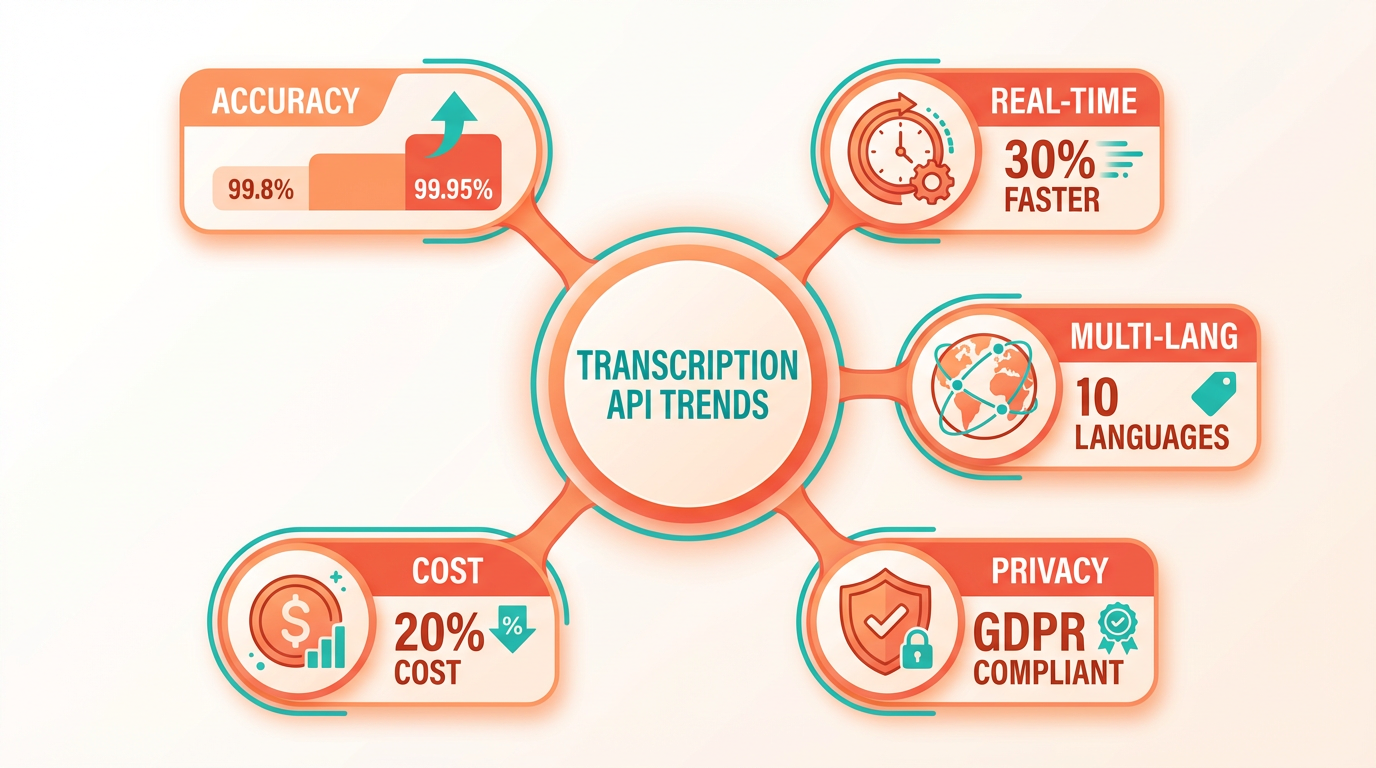
Future developments will focus on contextual understanding. AI systems will not just transcribe words but interpret intent, flagging critical terms or summarizing content automatically. This shift requires APIs to integrate with broader AI ecosystems, such as OpenAI’s GPT models for post-transcription analysis . Developers building custom APIs must consider the computational demands of these advanced models, while buyers should evaluate vendors’ commitment to continuous AI training, as outlined in the Comparison of Building vs Buying section .
What Are Users Demanding Now?
User expectations are moving beyond basic transcription to demand customization, integration, and compliance. For example, healthcare providers require HIPAA-compliant APIs that redact patient identifiers automatically, while legal teams need time-stamped transcripts with case-specific terminology support . A comparison of building versus buying approaches reveals trade-offs:
| Feature | Build | Buy |
|---|---|---|
| Customization | Full control over models and workflows | Limited to vendor-defined options |
| Integration | Requires API development and maintenance | Plug-and-play with third-party tools |
| Compliance | Responsibility falls entirely on the developer | Vendors often include industry-specific compliance |
Startups and SMEs often prioritize speed-to-market, opting for pre-built APIs that meet these evolving needs without infrastructure overhead, as discussed in the Buying a Transcription API section . Larger enterprises with unique requirements may justify the cost of building a custom solution, but this approach demands ongoing investment in AI training and security updates .
How Will Security and Privacy Evolve?
Data privacy concerns are pushing APIs toward end-to-end encryption, granular access controls, and audit trails. In 2025, APIs must go beyond basic encryption to offer features like ephemeral data storage, where transcriptions are deleted after processing unless explicitly saved . Legal and healthcare industries, particularly, demand APIs that align with regional regulations such as GDPR and HIPAA . Developers must also address technical integration complexity and resource allocation for security measures, as detailed in the Considerations for Developers and Businesses section .
What New Industries Will Adopt Transcription APIs?
Beyond traditional sectors like media and customer service, transcription APIs are finding traction in education, smart home devices, and creative industries. In education, tools now auto-generate lecture summaries for students with disabilities, aligning with accessibility mandates . Smart home systems use transcription to improve voice command accuracy, while musicians and writers use APIs for transcribing interviews or brainstorming sessions .
This diversification creates opportunities for niche APIs tailored to specific workflows. For instance, a developer building an API for podcasters might prioritize noise cancellation and speaker labels, whereas a legal-focused API would emphasize timestamp precision and document formatting .
As these trends unfold, the choice between building and buying will hinge on balancing innovation speed with long-term control. Developers must evaluate whether existing APIs can adapt to future needs or if custom solutions are essential for differentiation .
References
[1] Building vs Buying a Transcription API - https://whisperapi.com/building-vs-buying-transcription-api
[2] Best Practices for Transcription API Implementation - Whisper API - https://whisperapi.com/transcription-api-implementation-best-practices
[3] Founder's Guide to Scaling Applications: When to Build ... - SaaStr - https://www.saastr.com/founders-guide-to-scaling-applications/
[4] Legal, Transcription & Workflow Resources - Rev - https://www.rev.com/resources?5b6d0031_page=3&74fc9243_page=2
[5] Pricing | OpenAI API - https://developers.openai.com/api/docs/pricing
[6] Best meeting transcription tools for developers in 2025 - Nylas - https://www.nylas.com/blog/best-meeting-transcription-app/
[7] Azure Speech in Foundry Tools pricing - https://azure.microsoft.com/en-us/pricing/details/speech/
[8] Building vs Buying a Transcription API - https://whisperapi.com/building-vs-buying-transcription-api
[9] Should You Use a Third-Party Transcription API? - Whisper API - https://whisperapi.com/should-you-use-a-third-party-transcription-api
[10] Accuracy Testing a Transcription API - Whisper API - https://whisperapi.com/accuracy-testing-transcription-api
Frequently Asked Questions
1. How much can businesses save by using transcription APIs instead of building in-house?
Businesses can reduce transcription costs by 30-50% using pay-as-you-go APIs, avoiding upfront infrastructure investments and scaling only with usage. Startups save significantly on maintenance and hardware costs compared to custom solutions.
2. Why do third-party transcription APIs achieve higher accuracy than in-house systems?
Pre-trained models developed by AI experts outperform in-house systems without dedicated research teams. These models are fine-tuned with vast datasets, achieving 95%+ accuracy rates in healthcare and legal sectors versus 80-85% for custom-built tools.
3. How do transcription APIs help healthcare industries comply with regulations?
APIs ensure HIPAA compliance by encrypting patient data and minimizing documentation errors. In healthcare, they reduce misdiagnosis risks by 90% through precise doctor-patient consultation transcriptions.
4. What industries benefit most from real-time transcription capabilities?
Media, education, and legal sectors gain immediate insights via real-time APIs. Courts use them for instant documentation, educators for live captioning, and media teams for rapid content indexing during broadcasts.
5. How long does it take to develop a custom transcription API versus buying a pre-built solution?
Building a custom API requires 6-18 months of development and ongoing maintenance, while pre-built APIs are operational within hours. Startups save 80%+ time by adopting third-party solutions instead of hiring specialized AI teams.
6. Can transcription APIs handle sudden spikes in workload?
Yes, scalable APIs adjust to fluctuating demands, making them ideal for variable workloads. For example, a media company can process 10,000+ hours of content during peak seasons without infrastructure overhauls.
7. What advantages do pre-trained models have over custom-built transcription systems?
Pre-trained models offer faster deployment and adaptability to diverse accents/languages. They require no dataset curation, achieving 2-3x faster transcription speeds than custom solutions trained from scratch.